


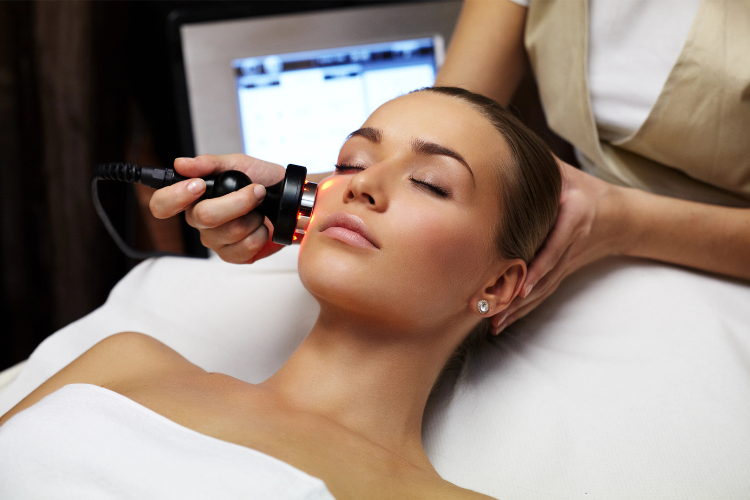
When you think of a facial, you might imagine the typical spa scene: a dimly lit room, the scent of lavender in the air, soft music, and a skilled aesthetician gently massaging creams into the skin.
Facials have long been staples in the world of self-care and luxury. However, as our understanding of skin science has evolved, so has the technology behind these non-surgical treatments.
In recent years, a new category of experience is giving the old-school spa facial a run for its money: the results-driven, medical-grade facial.
While both types of facials work on the face, they serve entirely different masters. One is designed to help you unwind and achieve a temporary glow; the other is designed to physically and chemically improve your skin's health.
If you are trying to decide where to invest your time and money for your skin, you’ll want to know the gap between a spa day and a clinical treatment. Let’s break down the difference between the spa facial and the medical-grade treatment:
What Defines a Spa Facial?
A spa facial is, first and fore most, an experience. Its primary objective is relaxation and surface-level maintenance.
When you book a facial at a traditional day spa, the environment is carefully curated to lower your cortisol levels. The focus is on the sensory journey with aroma therapy, steam, and extensive facial, neck, and shoulder massages.
From a technical stand point, spa facial sutilize OTC or spa-grade products. These products often smell divine and feel luxurious, but they are formulated to be safe for almost everyone to use without supervision.
This means the concentration of activeing redients like retinol, vitamin C, or alpha hydroxy acids (AHAs) is kept relatively low. These OTC products work on the stratum corneum, the very outermost layer of the skin.
The result of a spa facial is usually an immediate, temporary boost in hydration and a brighter complexion due to increased circulation from the massage. It is the perfect pick-me-up before an event or a way to de-stress after a long week, but it is not intended to treat deep-seated skin issues.
What Makes a Facial “Medical-Grade”?
Often referred to as a medi-facial or clinical facial, a medical-grade facial is performed in a medical setting, such as a plastic surgery center or a medical spa, and is usually overseen by a medical director or a licensed provider.
Unlike the spa version, a medical-grade facial is a corrective treatment that affects the skin at a deeper cellular level. These treatments utilize professional-strength products and medical devices that are not available in a traditional day spa. Because these products are more potent, they require more training to administer safely.
In a medical-grade setting, your skin will be professionally analyzed. The provider looks for underlying structural issues, pigmentation depth, and signs of conditions, such as acne or rosacea. In short, the focus shifts from comfort to correction.
Key Differences in Products and Technology
1. Ingredient Concentration
Medical-grade products, also known as cosmeceuticals, contain significantly higher concentrations of active ingredients. For example, where a spa-grade exfoliant might use 5% lactic acid, a medical-grade peel might jump to 30% or higher.
These products are formulated with advanced delivery systems that allow the ingredients to penetrate beyond the surface and reach the dermis, where collagen and elastin are produced.
2. Advanced Devices
A spa might use a simple facial brush, whereas a medical-grade facial often incorporates sophisticated technology. This includes:
● Medical-Grade Microdermabrasion
● LED Phototherapy
● Chemical Peels
● Ultrasonic Technology
● And more
3. Safety and Assessment
Because you are in a medical environment ,the safety protocols are more rigorous. Your provider will take a full medical history to ensure that the active ingredients won't react with any medications you are taking or aggravate any underlying health conditions.
What Each Type of Facial Is Best For
Choose a Spa Facial if:
● You want to reduce stress and enjoy a massage.
● Your skin is generally healthy, and you just want a glow.
● You have a major event tonight and want your makeup to sit smoothly.
● You want a treatment with zero risk of redness or peeling.
Choose a Medical-Grade Facial if:
● You are struggling with persistent acne or clogged pores.
● You want to reduce the appearance of fine lines and wrinkles.
● You have hyper pigmentation, melasma, or sunspots.
● You have textural issues, such as scarring or large pores.
● You want to see a measurable ,long-term change in your skin's health.
Short-Term Glow vs. Long-Term Change
It is helpful to think of a spa facial like a professional makeup application: it makes you look fantastic for a day or two, but eventually, the effects wear off. The hydration boost and the rosy look from the massage are short-lived.
A medical-grade facial is more like a workout for your skin. The results are cumulative. While you might leave the office looking a little pink or even experience some peeling over the next few days, you are triggering a healing response in the body.
By stimulating the dermis, you encourage the skin to produce more collagen and speed up cellular turn over. Over a series of treatments, the structure of your skin actually improves, becoming thicker, firmer, and more resilient.
Safety and Customization
One of the greatest advantages of a medical-grade facial is the level of professional customization. In a day spa, you can usually choose from a preset menu of facials, but in a medical setting, the treatment is tailored to your specific skin chemistry on that exact day.
For example, if you have active cystic acne and sensitive, dehydrated skin, your provider can mix and match modalities to treat both without worsening inflammation.
This medical over sight is better suited for patients with problem skin compared to a day spa, as using the wrong high-strength ingredient can easily cause chemical burns or long-term irritation if not handled by a pro.
Who Should Consider Medical-Grade Facials?
Acne & Rosacea Patients: These conditions require clinical-strength salicylic acid or specialized light therapy that spa products simply can't provide.
The Preventative Crowd: Younger patients are using medical facials to prevent fine lines before they appear.
Maintenance for Other Procedures: If you invest in Botox, fillers, or laser treatments, medical-grade facials are the insurance policy for your investment. They keep the skin healthy and the canvas smooth, which actually helps your injectables look better and last longer.
Sun Damage Correction: If you spent too much time in the sun in your teens and twenties, medical facials can help pull that pigment to the surface and shed it.
Also Read: Filler Migration Myths: What Really Happens Under the Skin
Elite Medical-Grade Facials in Los Angeles
Ask yourself: Am I looking to relax, or am I looking to fix something?
Your skin is your body’s largest organ, and how you treat it matters. While there will always be a place for the relaxation and pampering of a spa facial, your long-term skin health deserves the precision of science.
At the end of the day, taking care of your skin can be both a luxury and a corrective necessity; you just have to choose the right tool for the job.
Ready to see real changes in your complexion? Schedule a consultation at Revive Wellness Centers today. Our experts will help you design a medical-grade treatment plan for the skin of your dreams.